
How to Check Your Home's Water Pressure
The Five-Minute Test That Tells You What’s Going On in Your Plumbing
Water pressure is one of those things most homeowners never think about until something feels wrong — a weak shower, a struggling faucet, or a new system that requires a specific PSI range. You may also want to test PSI for new reverse osmosis or other water treatment equiptment. In my case, I wanted to know exactly what pressure was running through the house, so I tested it at both an exterior hose bib and an interior bathroom faucet using a simple pressure gauge.
Quick Facts
- Project: Check whole-house water pressure at an exterior and interior faucet
- Difficulty: Very easy, beginner-friendly
- Time: 5-15 minutes
- Main challenge: Getting a leak-free connection and understanding what the PSI reading actually means
- Best for: Homeowners troubleshooting high or low water pressure, or preparing to install equipment such as a water softener, reverse-osmosis system, or irrigation system
- Typical residential range: Roughly 40-80 PSI (verify with licesned plumber)
- Call a professional when: Pressure is consistently very high or low, you suspect a plumbing leak or failing pressure regulator, or you are not comfortable diagnosing the system yourself
The Situation
I wanted to get a better idea of the water pressure running through our home. This is useful information for general troubleshooting, but it also matters when you're installing equipment that specifies a minimum or maximum incoming water pressure — things like reverse-osmosis systems, water softeners, filtration systems, and irrigation equipment. Rather than guessing based on how strong the shower feels, I used an inexpensive water-pressure gauge to get an actual PSI reading.
⚠️ Before You Start
I'm not a licensed plumber. This is a basic homeowner diagnostic test, not a substitute for a professional plumbing inspection. For the most useful static pressure reading, try to make sure major water-using fixtures and appliances are off while you perform the test. Also remember that water pressure and water flow are not the same thing. A pressure gauge measures PSI. You can still have reasonable pressure but poor flow because of a clogged aerator, restricted pipe, filter, valve, or other obstruction.
What I Used
- Water pressure gauge
- Adapter for sink faucet
- Water regulator (example)
A basic pressure gauge is an inexpensive tool that can be useful to keep around for future plumbing troubleshooting.
The Steps
1. Make sure the gasket is installed in the pressure gauge.
The rubber gasket helps seal the connection between the gauge and the hose bib. Without it, you'll likely get leaking around the threads.
2. Reset the peak-pressure pointer if your gauge has one.
The gauge I used has a black needle that shows the current pressure and a red pointer that records the highest pressure reached. Twist the reset knob until the red pointer returns to zero before testing.
3. Screw the gauge onto an exterior hose bib.
Attach it just like you would attach a garden hose and hand-tighten it securely.
4. Make sure major water use inside the house is stopped.
For a basic static-pressure test, avoid running faucets, showers, washing machines, dishwashers, or irrigation systems while taking your reading.
5. Turn the exterior faucet fully on.
Open the hose bib all the way and watch the gauge.
My outdoor reading settled at approximately 96 PSI, with the peak indicator reaching a little over 100 PSI.
6. Turn the water off and remove the gauge.
Let any remaining water drain out. Check that the gasket hasn't fallen out before putting the gauge away or moving to the next test.
7. To test indoors, remove the faucet aerator.
I used a bathroom faucet for the second test. Unscrew the aerator from the end of the faucet.
8. Install the faucet adapter.
The adapter I used has threads that connect to the faucet on one end and standard garden-hose threads on the other.
Screw the adapter into the faucet, then attach the pressure gauge.
9. Make sure the adapter and gauge are tight.
Check that the washers are seated properly before turning on the water. A small dribble isn't a disaster for a quick test, but a solid connection gives you a cleaner setup.
10. Turn the faucet fully on and read the gauge.
My indoor reading was also approximately 95-96 PSI.
Testing at more than one location isn't really about averaging the readings. It's useful because similar readings help confirm that you're seeing roughly the same pressure throughout the plumbing system rather than a problem isolated to one fixture.
Prefer to watch?
Here is the video on YouTube.
The Result
My house tested at approximately 96 PSI at both the outdoor hose bib and an interior bathroom faucet. That's on the high side. We've lived in this house for about ten years without an obvious pressure-related plumbing problem, so I'm not immediately changing anything. But now I know what the pressure is, and it's something I can keep in mind if leaks, supply-line failures, fixture problems, or other plumbing issues start showing up.
A Note on High vs. Low Water Pressure
A commonly referenced residential range is roughly 40-80 PSI, with many homes operating comfortably somewhere around 50-60 PSI.
Very generally:
- Below 40 PSI: May feel weak
- 40-60 PSI: Common comfortable range
- 60-80 PSI: Strong pressure
- Above 80 PSI: Worth investigating
If your pressure is unusually high, possible next steps include checking whether your home has a pressure-reducing valve (PRV), determining whether an existing PRV needs adjustment or replacement, contacting your water utility, or having a plumber evaluate the system. If your pressure seems low, start with simple causes first: clogged faucet aerators, clogged shower heads, partially closed valves, whole-house filters, water softeners, leaks, or other restrictions. A booster pump can sometimes help with genuinely inadequate incoming pressure, but I would diagnose the cause before jumping straight to installing one.
Homeowner Intelligence
💰 What this simple test can save you: A basic gauge lets you gather real information before paying someone to troubleshoot by guesswork. It can also help you determine whether a problem is likely happening at one fixture or throughout the house.
Why this test matters: How strong the water feels isn't always a reliable indication of your home's pressure. Measuring PSI gives you an actual number you can use when troubleshooting or installing equipment with pressure requirements.
Trickiest part of this test: Testing an indoor faucet. A standard pressure gauge usually has garden-hose threads, so you'll need the correct adapter for your particular faucet.
How to know you're doing it right: The gauge is securely connected, major water use in the house is off, the faucet or hose bib is fully open, and the gauge settles on a stable PSI reading.
What my reading told me: Both my exterior and interior tests came in around 95-96 PSI. Getting similar readings at two different locations gave me more confidence that this represents the general pressure in the house rather than a restriction at one faucet.
If only one faucet seems weak: Start at that fixture. Clean the aerator or shower head and check the local shutoff valves, cartridge, and supply lines.
If the entire house seems weak: Look at whole-house causes such as the main shutoff valve, pressure regulator, filters, water softener, leaks, municipal supply, or restrictions in the plumbing.
When to stop and call a plumber instead: If your pressure is consistently very high or very low, you suspect a hidden leak, your pressure regulator may be failing, or you're not comfortable modifying any part of the plumbing system.
What I'd do differently next time: I'd make sure no other water is running anywhere in the house before each reading and record the PSI at the same test locations periodically. That would make it easier to spot changes in the system over time.
Before You Wrap Up
✓ Double-check: Make sure the gauge is removed, the faucet or hose bib is completely shut off, and the gasket is still inside the gauge.
💡 Remember: PSI measures water pressure — not gallons-per-minute flow. A clogged fixture can feel like low pressure even when the home's actual static pressure is perfectly normal.
💰 Save money next time: Keep the gauge and faucet adapter together in your plumbing supplies. It's a simple diagnostic tool you'll already have when another pressure-related problem comes up.
➜ Watch next: Check out more videos in our Home Maintanence playlist.
Want the full toolkit for projects like this one? Toolkit gives you downloadable guides, checklists, and real project help.
🛠 Tools & products I love: Amazon Storefront | Lowe's Storefront
This post is for informational purposes and isn't a substitute for professional plumbing advice. Please use your own judgment before diagnosing or modifying your home's plumbing system, and consider hiring a licensed plumber if you're not comfortable with this kind of work.
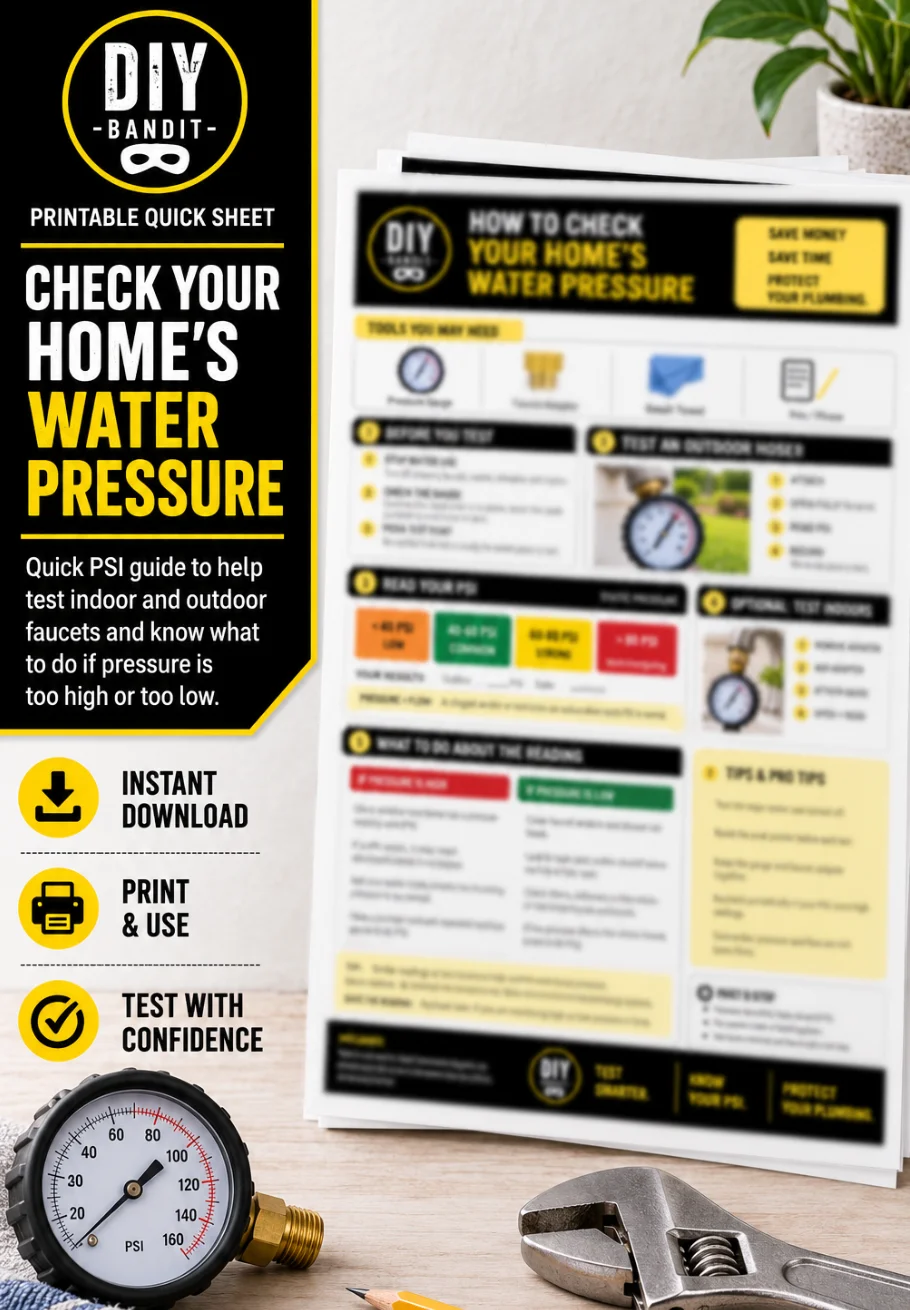
Get the Home Water Pressure Quick Guide
Want the printable resource related to this exact project? That's exactly what the Homeowner's Toolkit is for — join here for downloadable project guides and direct help with your own DIY work.
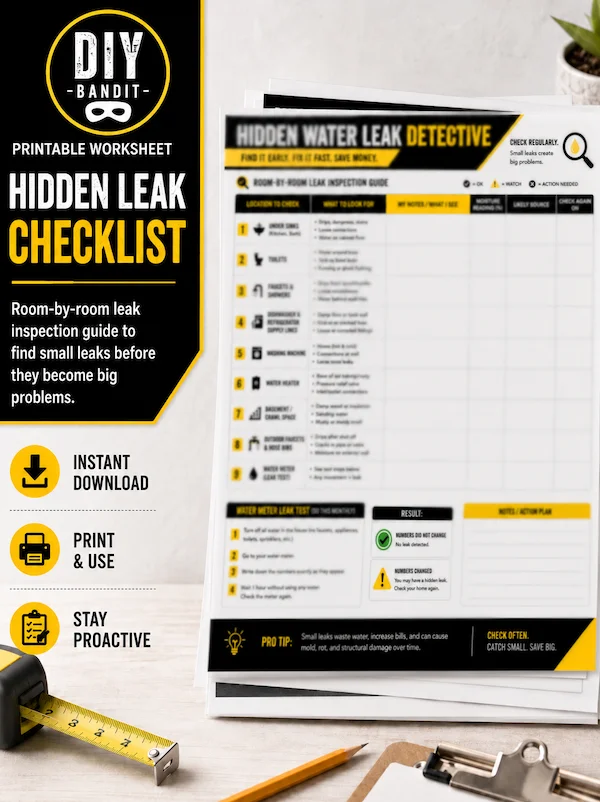
Get the Leak Checklist
Want another printable checklist for home leaks? That's exactly what the Homeowner's Toolkit is for — join here for downloadable project guides and direct help with your own DIY work.
Get the Emergency Map
Want the printable resource related to this exact project? That's exactly what the Homeowner's Toolkit is for — join here for downloadable project guides and direct help with your own DIY work.