
Yokohama GTX All-Season Tire Review — 6,000 Miles In
My Coopers were done. Not dramatically — just old, with the tread worn down far enough that it was time. I went a different direction and put Yokohama GTX all-season tires on our 2011 Subaru Forester, then drove them for 6,000 miles on highway, gravel, and Iowa snow before writing any of this down. Here's what I actually found, including the tread depth measurement at 6,000 miles and what the warranty covers.
Quick Facts
- Product: Yokohama GTX all-season tires
- Vehicle: 2011 Subaru Forester (all-wheel drive)
- Replaced: Cooper tires, worn down with age
- Price: $600 — bought at Discount Tire with instant savings plus credit card cashback
- Warranty: 70,000 miles
- Bottom line: Impressed, and we're keeping them
The Situation
I liked my Coopers. That's worth saying up front, because this isn't a case of a tire failing and me going looking for something better. They simply got old and the tread wore down to where replacing them was the responsible call.
So I had a choice: buy the same thing again, or try something different. I went with the Yokohama GTX all-seasons, bought through Discount Tire, where a combination of instant savings and credit card cashback made the deal work for us.
I'm not a tire expert. I'm a dad with two kids and a Subaru, trying to make a decent call with my family's money — which is most of the reason I made the video. There are plenty of professional tire reviews out there with instrumented braking tests. This isn't one of those. This is what 6,000 real miles looks like.
⚠️ Before I Get Into It
A few things to be clear about, because they affect how much weight this review should carry.
I'm not a professional tire reviewer, and I didn't do instrumented testing. No measured stopping distances, no wet-skid pad numbers, no decibel readings. What I have is seat-of-the-pants impressions over 6,000 miles and one real tread measurement.
Nobody paid for this. Discount Tire isn't sponsoring this video or this post. I bought these tires with my own money, and I mention the store only because the free rotations and the national footprint genuinely factored into my decision.
My only comparison is a set of worn-out Coopers. Any new tire rides better than an old one. I'm not going to pretend I can separate "these are good tires" from "these are new tires," and you shouldn't read my impressions as though I could.
Tires are a safety item. Mine were mounted and balanced by professionals, which is the only way I'd do it. If your tread is low, if you're seeing uneven wear, or if something doesn't feel right when you drive, that's a conversation with a tire shop, not a thing to put off.
What I Bought
- Yokohama GTX all-season tires — sized for a 2011 Subaru Forester
- Tire pressure gauge
- Tread measuring tool
- Purchased and installed at Discount Tire, including mounting and balancing
- Backed by a 70,000 mile warranty
- Free tire rotations included with the purchase
What drew me to them on paper: all-seasons are built to deliver a quiet ride with good traction, and the tread on these has noticeably wide gaps between the blocks. That matters for two reasons — wide channels shed water, and they give snow somewhere to pack in, which is what actually generates grip in winter. The marketing talks about a durable rubber compound with a new resin technology. I can't verify a compound claim, but I can tell you that when I pressed hard on the tread blocks, they sprang back to shape rather than staying deformed.
They also had strong reviews on Discount Tire's site and elsewhere, and I'd rather you check those than take my word alone.
How I Tested Them
1. Drove them the way we actually drive. Highway, back roads, gravel — normal family use in a part of the country with real seasons. No track time, no artificial conditions.
2. Paid attention to the three things that matter day to day. Grip, braking, and noise. The answer on all three was good. No pulling in corners, no vagueness in the steering, no drone on the highway.
3. Took them into snow. We live in a snowy area, so this was the test I actually cared about. I ran brake checks on snow-covered surfaces and they gripped well. Important caveat: the Forester is all-wheel drive, and AWD is doing real work in those conditions. I can't cleanly separate tire grip from drivetrain in a snowy parking lot, and anyone who tells you they can on a casual test is overselling it.
4. Measured the tread at 6,000 miles. This is the part I think makes the review worth something. I pulled a wheel and put a tread depth gauge on it rather than eyeballing it. Result: 10/32 of an inch, which is normal wear for that mileage — not remarkable, not concerning.
Prefer to watch?
Here is the video on YouTube.
The Verdict
I'm impressed, and we're keeping them.
The ride is quiet, grip has been good in every condition I've put them in including snow, braking feels solid, and the wear at 6,000 miles measured out normal. Pair that with a 70,000 mile warranty and free rotations, and it's been a good purchase for our family.
That's a soft recommendation rather than a hard one, and deliberately so — 6,000 miles is early. The real test of a tire is year three, and I'll know more then than I do now.
A Note on "Your Setup Will Probably Be Different"
Mine is an all-wheel-drive 2011 Subaru Forester driven in the Midwest, on mixed highway, gravel, and winter roads. That combination shapes everything above.
If you're on a front-wheel-drive car, my snow impressions don't transfer cleanly — a lot of what I felt was the Subaru's drivetrain. If you live somewhere that doesn't get snow, the winter performance is irrelevant to you and ride quality and tread life are what matter. If you're driving significantly more aggressively than a dad running errands, or towing, or putting on highway miles at a rate I'm not, your wear numbers will look different from my 10/32 at 6,000.
And tread depth varies by tire model and size, so the useful thing isn't my number — it's the habit. Measure yours when they're new, and you'll have a baseline that makes every later measurement mean something.
🧠 Homeowner Intelligence
💰 What this purchase actually cost: The sticker price wasn't the real number — instant savings at Discount Tire plus cashback on the credit card brought it down meaningfully. I paid about $600 out the door! Tire pricing moves constantly and stacking a store promotion with a card reward is the easiest money you'll save on a set.
Why the tread measurement matters more than the review: A 70,000 mile warranty is only worth something if you can prove premature wear. If you measure tread depth when the tires are new, then again every so often, you have documentation — and that's the difference between a warranty claim that gets honored and one that turns into your word against theirs. A tread gauge costs a few dollars. Almost nobody uses one.
Trickiest part of reviewing tires honestly: Separating "new" from "good." Everything feels better than what you just took off, especially when what you took off was worn out. The 6,000-mile measurement exists specifically because it's the one thing in this review that isn't an impression.
How to know you're doing it right: No pulling to either side under normal driving, no vibration through the wheel at highway speed, and even wear across the tread face when you check it. Uneven wear is the early signal — it usually points to alignment or inflation rather than the tire itself.
When to stop and call a professional: Mounting and balancing, every time. Beyond that: visible cornering wear, a bulge in the sidewall, a puncture anywhere near the shoulder, or any vibration that shows up suddenly. Those are shop visits, not driveway projects.
What I'd do differently next time: Measure the tread the day they're installed. I started my measurements at 6,000 miles, which means I know the depth is normal but I don't know exactly how much I've used. A thirty-second measurement in the parking lot would have given me a real baseline for the life of the warranty.
Before You Wrap Up
✓ Double-check: Tires were balanced at install, no pulling or vibration in the first few hundred miles, and you've got your rotation schedule set — free rotations are only free if you actually go get them.
💰 Save money next time: Stack a store promotion with credit card cashback, and buy where rotations are included. Free rotations across a national chain are worth real money over the life of a 70,000 mile set, and they're the thing most people forget to factor into the price comparison.
➜ Watch next: Check out more videos in our Car & Garage series.
Want the full toolkit for projects like this one? Toolkit gives you downloadable guides, checklists, and real project help.
🛠 Tools & products I love: Amazon Storefront | Lowe's Storefront
⚠️ This post is meant to help with your own project or purchase decision — not to replace professional advice. Please consider the risks before starting any project, and know that you're responsible for your own results. I'm not a licensed contractor or expert, and this channel is not liable for any damage, injury, or loss related to anything shown here. Any action you take based on this video is at your own risk. Tires are a safety-critical component — have them mounted, balanced, and inspected by a qualified tire shop, and replace them when tread depth or condition calls for it.
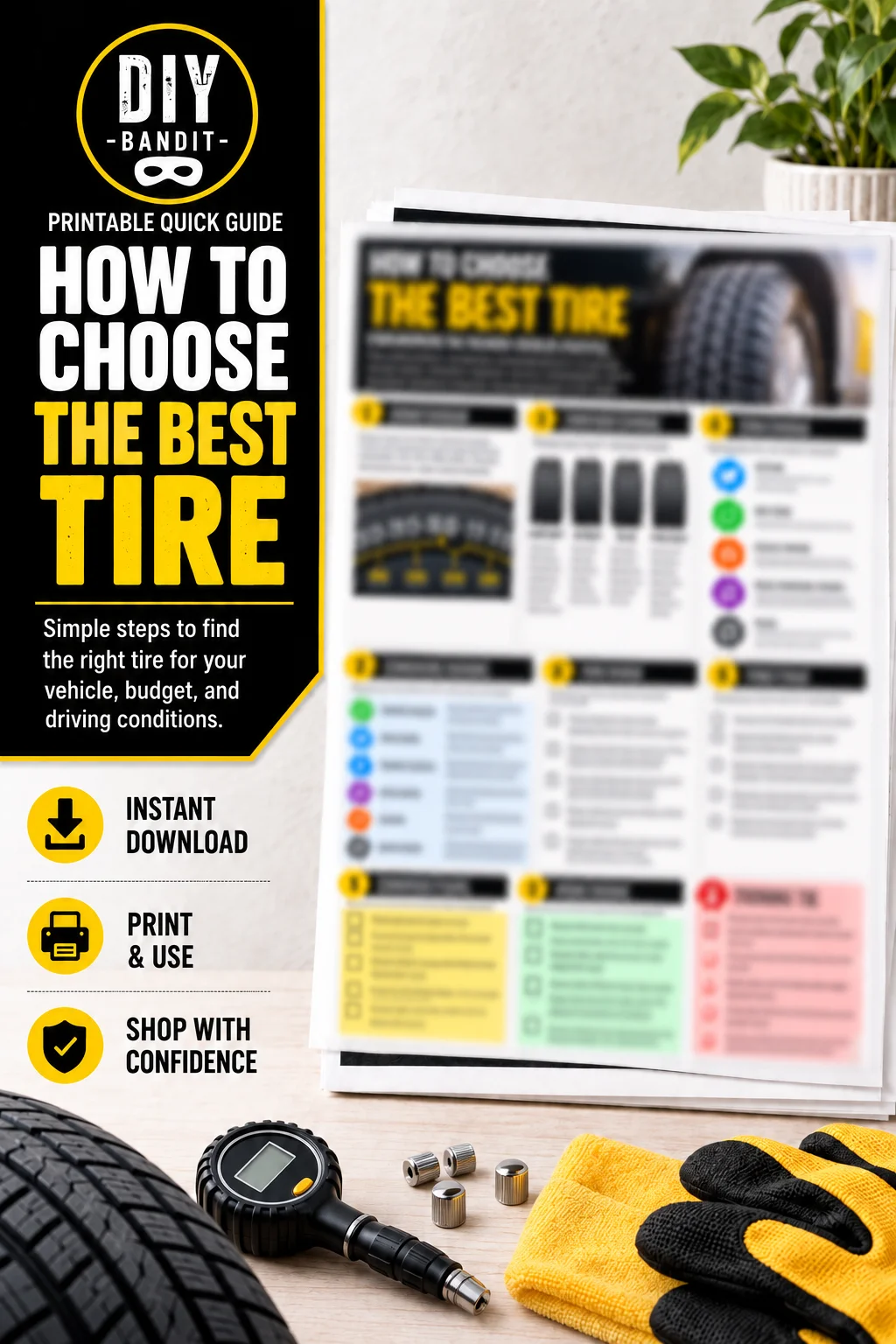
Get the Best Tire Guide
Want a printable document? That's exactly what the Homeowner's Toolkit is for — join here for downloadable project guides and direct help with your own DIY work.